FAQs
- Home
- FAQs
Frequently Asked Questions
What eye conditions do you treat?
We treat: cataracts (our primary focus), glaucoma, diabetic retinopathy, retinal detachment, squint (strabismus), corneal disease, pterygium, foreign bodies, eyelid conditions (oculoplasty), and more. We also provide refraction and optical services, contact lenses, and low vision aids.
What are your hospital opening hours?
Our outpatient department is open for 8 hours daily (Monday–Saturday). Emergency services operate 24 hours a day, 7 days a week. Our on-site pharmacy is also open around the clock. Please call +256 744 444 888 for specific appointment scheduling.
Do I need a referral to come to OPGFA?
No referral letter is required. Any person experiencing eye problems is welcome to walk in to our hospital at Ntinda Road No.64, Ntinda, Kampala, Uganda. Our clinical officers will screen and assess you and refer you to the appropriate doctor.
Are all services truly free?
Yes — 100% free. Every single service at OPGFA Free Eye Hospital is provided at absolutely no charge to the patient. This includes the consultation, examination, surgery, anaesthesia, medication, and all post-operative care. There are no hidden fees whatsoever.
How long does cataract surgery take?
Phacoemulsification (modern cataract surgery) typically takes 15–30 minutes per eye. The entire hospital visit on surgery day is usually 4–6 hours, including pre-operative preparation, surgery, and recovery observation. Most patients go home the same day.
Is cataract surgery painful?
No. Modern phacoemulsification is performed under local anaesthesia (eye drops). Patients are awake but feel no pain — only mild pressure sensations. Children may receive general anaesthesia. The surgery is well-tolerated by patients of all ages, including those in their 90s.
How quickly will I see after cataract surgery?
Most patients notice improved vision within 24 hours of surgery. Vision continues to improve and stabilise over 4–6 weeks. Some blurring, glare, and light sensitivity in the early days is normal. You will be given eye drops and reviewed at follow-up appointments.
Can elderly patients have cataract surgery?
How do eye camps work?
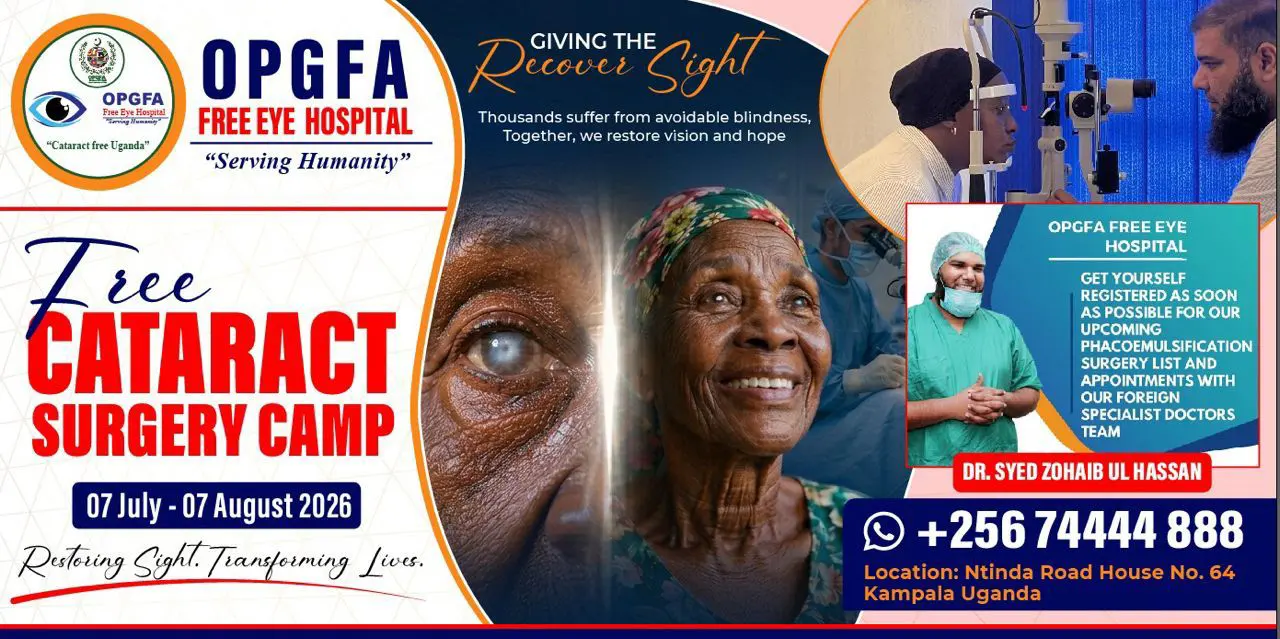
OPGFA deploys a mobile surgical team to a district hospital or community centre. On camp day, patients register and receive a full eye screening. Those found to have cataracts or other treatable conditions are operated on at the camp site, receive free medication, and are given follow-up instructions. Everything is free.
How can my community request an eye camp?
If you are a local government official, MP, or community leader who would like OPGFA to conduct a free eye camp in your area, please contact us at freeeyehospital6@gmail.com or call +256 744 444 888. We will assess feasibility and logistics with you.
How is donation money used?
Your donation directly funds: surgical consumables (intraocular lenses, sutures, medications), team transport to remote camps, camp logistics (tents, equipment), hospital running costs, ambulance maintenance, and food distribution programmes. We are committed to fiscal transparency and efficiency.
How can I donate to OPGFA?
You can donate through our donation page on this website, or contact us directly at freeeyehospital6@gmail.com for bank wire transfer details. We accept one-time and recurring donations. Corporate partnerships and in-kind donations (medical equipment, medicines) are also welcome.
Have a different question?
Our team is happy to answer any question about our services, eye camps, donations, or volunteering.